Physical Address
304 North Cardinal St.
Dorchester Center, MA 02124
Physical Address
304 North Cardinal St.
Dorchester Center, MA 02124
Grace Ives discusses Girlfriend, her 2027 Olivia Rodrigo support slot, and why staying true to herself matters most.
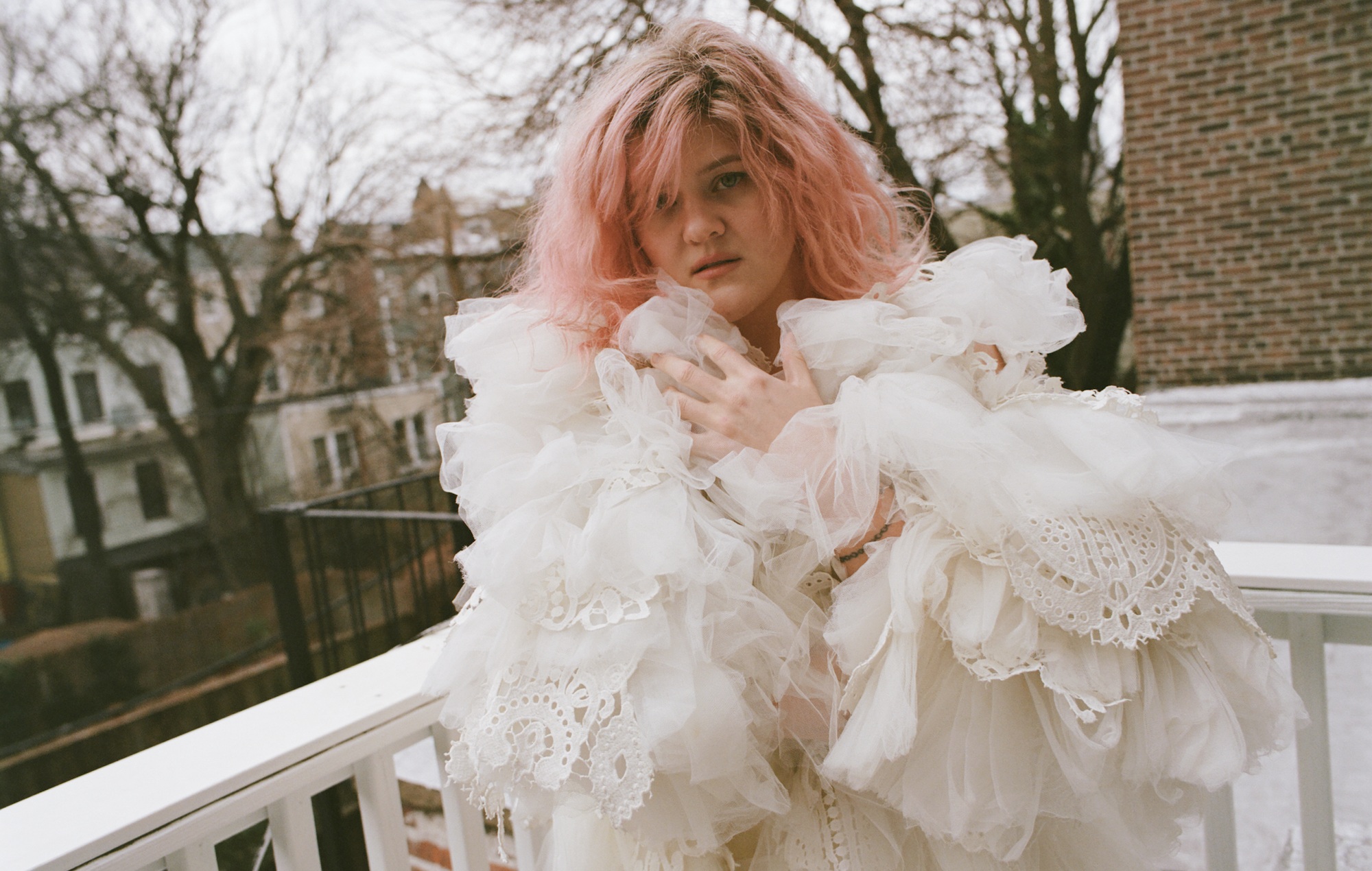
Grace Ives is about to play to the kind of crowds most artists only daydream about. A few days after the news broke that she will support Olivia Rodrigo on the pop star’s 2027 arena run, the Brooklyn musician appeared on NME’s screen from a San Francisco hotel room, pastel pink hair slightly untidy and a grin already giving her away. She said she felt “pretty ecstatic”.
“It feels like the biggest present I’ve ever gotten in my life,” Ives said. “I don’t know what the appropriate reaction is. I’m overwhelmed by the vision of what that looks like when I close my eyes. It feels so massive and exciting, like what I’m doing right now, but times 200. It’s the final stage artists work towards, and I get to try it out for a week or two. It’s the ultimate validation, like the biggest person in the world being like ‘I fuck with you.’”
That kind of momentum has been building for a while. Her third album, Girlfriend, arrived in March and brought a fresh wave of critical attention after Janky Star in 2022 and her debut 2nd in 2019. It marks a high point for an artist who first started uploading music from her dorm, beginning with ringtones and eventually an EP of nursery rhymes.
Her current headline tour is taking her into smaller rooms than the ones she’ll join Rodrigo for next year, but it still says plenty about the demand around her live show. The London date next month is already sold out. Onstage, she’s drawing from all three albums, a body of work she sees as rougher around the edges than Rodrigo’s catalogue, which is part of why the support slot feels so interesting to her in the first place.
“I’m excited to hear the rest of Olivia’s new music because it feels like this [opener] lineup is pointing to something a lot dirtier and grungier than I would associate with her and her work in the past,” Ives said, pointing to fellow openers including Wolf Alice and Die Spitz. Rodrigo has drifted further into rock territory lately, but she began with straight pop hits. “It’s cool that this is the music she’s excited by. It’s not super clean, and the landscape is sonically pretty diverse.”
That appetite for something messier makes sense coming from Ives, because Girlfriend grew out of a period she describes bluntly as “gross.” In the album manifesto, she casts herself as a bad daughter, a shitty girlfriend and a disaster who had abandoned both herself and her music. The crash-out she describes followed Janky Star, the record that introduced many listeners to her blend of synth-pop and electro-pop, now widened out with pianos, guitars and those ethereal vocals that made lines like “what a mess, what a lovely mess” land so hard on songs such as “Lullaby.”
For Girlfriend, though, the instinct was not to wallow in the wreckage but to start cleaning it up. Ives says that came after a stretch spent “in a desperate search for a sense of self.” “I would find myself catapulted into things that have nothing to do with me,” she said. “But I needed to test things in order to see who I am. It’s the whole writer joke of doing it for the memoir. I feel like that might just be a thing that women go through.”
Eventually, the performance of all that got tiring. Stopping drinking and deciding to be more honest with herself and the people around her brought a kind of relief she says she hadn’t quite registered before. “I didn’t realise how uncomfortable [I was]. I think it’s so much nicer to tell the truth, for me personally,” she said. “I’m an anxious person, and adding a fakeness on top of anxiety is just a recipe for bad art. I’ve definitely done that. I’ve made music from a place of not wanting to be true to myself, and it hasn’t turned out the way that I personally wanted it, you know? The best version of it.”
“[Supporting Olivia Rodrigo is] the ultimate validation, like the biggest person in the world being like ‘I fuck with you’”
To shape that better version of herself into an album, Ives worked with Ariel Rechtshaid, whose credits include Charli xcx and Vampire Weekend, and John DeBold, who has also worked with HAIM and Dijon. The result is a record that moves from murky self-sabotage toward something clearer without losing its emotional weight. When asked about the sound, Ives described it as a process of play. “John and I definitely did a lot of playing, we’re like two kids in the sandbox,” she said. “There was a lot of joy and a lot of acceptance between the two of us. And Ariel, he has a relationship with John where they’re like brothers, and I fit into that dynamic really well.”
She also admits the sessions could feel like “vulnerability bootcamp.” “All of a sudden it’s like, ‘Hey Grace, what were those lyrics that you were saying earlier that no one really liked, including you? Can you read them to everybody?’” she said, dropping her voice and acting out the moment. “I’m reading my bad poetry. That’s where the vulnerability came in. That’s the test of breaking through that wall. If you go through with it, then suddenly you are free to say anything.”
That openness runs through songs like “Drink Up,” where she calls herself a “little bitch” while moving through little hits of this and sips of that, her voice turning from confident to petulant over a track that shifts between bouncy, distorted and lush textures. “Drink Up” moves in three parts and includes tempo changes, starts and stalls. “When you try to record that, it can feel heady or like pretentious music theory,” she said. “I feel like we got it to feel natural, and this song in particular, with all the mood changes to feel natural, it’s ambitious.”
The album keeps refusing the obvious route. On “Stupid Bitches,” her distorted vocals spin out “it doesn’t hurt me anymore” over clashing percussion and strings. “Avalanche” turns glitchy as she admits to “feeling sorry not sorry for the mess I made,” before a siren-like call cuts through. On “My Mans,” her voice lands with the steadiness of a religious chant before opening up into full pop force at the chorus. It is feminine and feral, alluring and scathing. When she sings “Every single guy I meet completes me/ I need a lover who can love me back” over swelling keys, it is easy to get pulled in, even if the narrator herself is clearly not to be trusted.

Grace Ives credit: Maddy Rottman
Having made an album out of what she calls the fertile debris of a short-lived spiral, Ives now sounds almost defiantly pro-crash-out. “I think crash-outs show people who you are. Or, even if it doesn’t, and it feels like a weird toddler version of you, tantruming that you wouldn’t wanna claim as your own… It’s easy to be like, ‘Oh my god, I was so crazy!’ But that was you. It’s good to lose your composure every now and then because you got it out of the way. People are complicated. And people should be allowed to be complicated.”
Of course, success can be its own kind of complication. The excitement around Rodrigo introducing Ives to a wider audience has already led some outlets to place her among indie acts who are about to “blow up”. For an artist who has spent so much of Girlfriend trying to strip away the false stuff, that sort of label is also a reminder to stay close to what’s real. “I have to be very careful to be true to myself and nice to myself and let myself be who I am,” she said. “Because I think that the realest version of myself is what people respond to.”
Grace Ives’ Girlfriend is out now via True Panther Records/Capitol Records. She is on tour now and will support Olivia Rodrigo in 2027.