Physical Address
304 North Cardinal St.
Dorchester Center, MA 02124
Physical Address
304 North Cardinal St.
Dorchester Center, MA 02124
Joshua leads Billboard through a late‑night Seoul fish market, revealing how his L.A. roots and love of acoustic indie sit alongside life in SEVENTEEN. He talks viral covers, tour moments where crowds hush for his quieter songs, and plans to produce and write more solo material.

It is raining, the fluorescent lights in the alley throwing a wet glow over blocks of crushed ice and silver fish. Joshua picks up a sea cucumber like he’s auditioning it for a part in a movie — gentle, amused, a little embarrassed to be filmed. He laughs when the host dares him to try the wasabi. He winces, then fesses up: that hit harder than he expected.
You have to try this with the wasabi.
That exchange, caught in Billboard’s Takes Us Out series, does more to explain Joshua than any press blurb. There is a casualness here that sits oddly next to the polish he wears on stage with SEVENTEEN: Los Angeles roots folded into Seoul training, an easygoing voice layered with craft. The market sequence — a late night, open 24/7, neon buzzing, merchants shouting in the background — becomes a small portrait of someone who still moves like a person more than a pop brand.
Joshua talks, offhand, about the things that matter to him musically: acoustic guitars first, the kind of indie songwriting that breathes around the edges of a melody instead of crowding it. He traces a line from the videos fans have clipped and shared — sparse covers, a guitar and his voice in a quiet room — to the bigger, stadium-ready harmonies SEVENTEEN layers on top of those same instincts. Watching him describe it, you can hear how those two worlds inform each other. The group’s choreography and production are huge; his sensibility is patient.
When the conversation moves to how he ended up here, he smiles and shrugs, telling a story that sounds like a late-night adventure as much as a career decision. He jokes that Korean seafood factored into his early choices — a quip that gets a laugh, and then a real, reflective line about community. SEVENTEEN, he says, feels like a band of people who learned how to lean on one another while figuring out their sound. That history — trainees living and sleeping in the same spaces, learning to finish each other’s lines musically and emotionally — is what fans have always responded to. The affection is genuine, and the audience knows it.
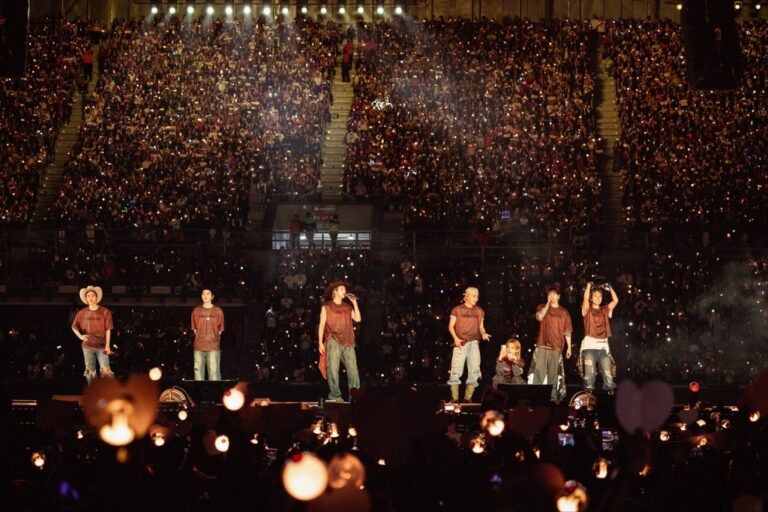
Fan reaction is immediate in performance. On the road with SEVENTEEN, Joshua’s quieter moments invite a different kind of charge from the crowd: a hush, then a thousand phones held steady, then a chorus that swells behind him. Those intimate moments have lived online too; clips of solo acoustic turns circulate as proof that this isn’t just stagecraft. People connect to the smallness inside the spectacle.
He lets slip that he wants to do more behind the board — producing, arranging, seeing how his songwriting sits when he builds tracks around it. It’s not a grand pronouncement so much as a practical itch: learn more, write more, bring what he likes to the group and off-stage work. He talks about dream collaborations the way a collector names records he wants on his shelf — a little shy, mostly specific to sound rather than celebrity. What he wants, it seems, is to make space where indie textures and K‑pop ambition can coexist.
Back in the market, he points at a stall and says this is where locals come to drink and snack after hours; people pick their dinner straight from trays and take it to a nearby restaurant. It’s domestic, slightly messy. It’s also instructive: the places that shape an artist are often the ones that don’t look like stages. Joshua’s music, whether shouted back at a stadium or swallowed in a quiet cover, carries that residue.
There’s a pleasant tension to his story — trained idol, LA childhood, a singer who thrives on small, honest arrangements. Fans will continue to follow where he goes: to the next acoustic clip, to a corner of a tour where he strips a song down, to whatever solo release finally emerges. For now, this fish-market conversation is a reminder that the person inside the group still likes to taste the wasabi and be surprised by it.