Physical Address
304 North Cardinal St.
Dorchester Center, MA 02124
Clarence Carter, the Alabama soul singer behind “Patches” and “Strokin’,” has died at 90 of natural causes.
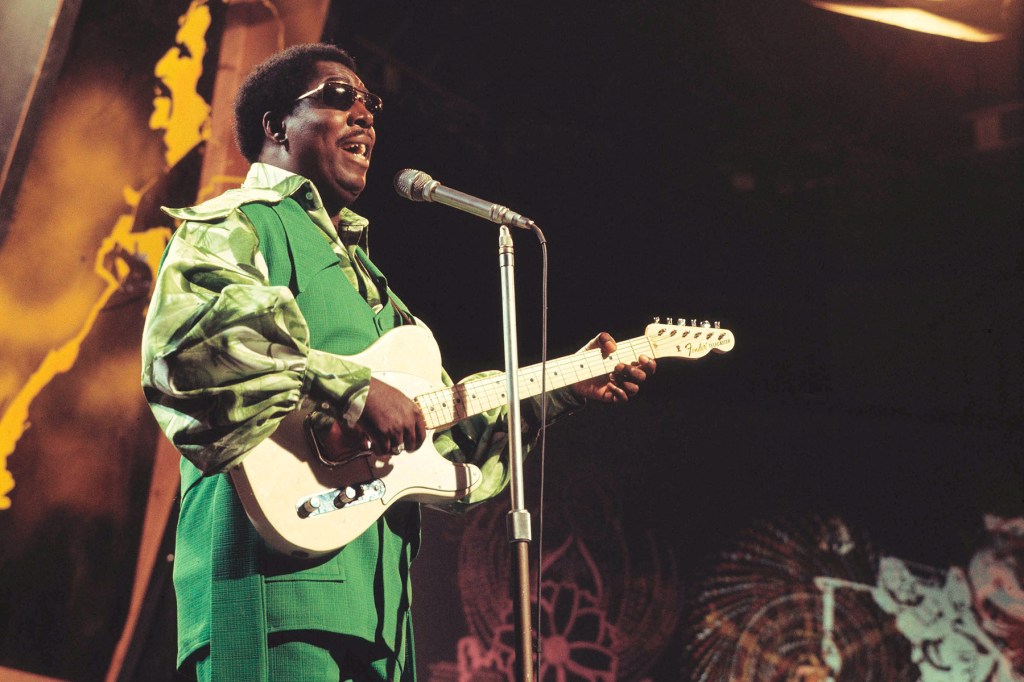
Clarence Carter, the blind Alabama-born soul and blues singer whose voice could turn tender, sly, and combustible in the space of a record side, has died at 90.
Bill Carpenter, a spokesman for Carter’s former wife and fellow singer Candi Staton, confirmed that Carter died Wednesday of natural causes.
Born in Montgomery, Alabama, Carter taught himself guitar and later studied music at Alabama State College. His biggest commercial breakthrough arrived in 1970 with “Patches,” the tear-streaked story of a poor country boy forced to grow up fast after his father dies and the family farm falls to him. The single climbed to No. 4 on the Billboard Hot 100, while the Patches album became his highest-charting on the Billboard 200, reaching No. 44.
Clarence Carter performs on a TV show in the UK, circa 1972. Michael Putland/Getty Images
That song made him a star, but Carter’s reputation ran even deeper in the bawdy, laughing edge of soul. “Strokin’,” his funky spoken-word seduction, was too explicit for commercial radio yet became a nightclub jukebox staple, with Eddie Murphy’s 1996 remake of The Nutty Professor helping keep it in circulation. On the track, Carter asks, “Have you ever made love just before breakfast?” and never really lets the joke cool down.
He had plenty of other songs in that same lane, including “Making Love on the Dark End of the Street,” which spins through a long, good-humored account of passion pushing people, and other creatures, to extremes. His catalog also included “Slip Away,” a No. 6 Hot 100 hit in 1968, and “Back Door Santa.”
Carter’s records were often anchored by serious players. On “The Road of Love,” he was backed by Duane Allman, then still a relatively unknown rocker and session musician before cofounding the Allman Brothers Band and later adding standout guitar work to records by Eric Clapton, Wilson Pickett and others. His forceful “Tell Daddy” also became the basis for Etta James’ “Tell Mama.”
He cut some of his most important material at Fame Studios in Muscle Shoals, Alabama, the same hit factory where Wilson Pickett, Aretha Franklin and other soul heavyweights made landmark records. Later in life, he recorded for the now-defunct Ichiban Records and for his own Cee Gee Entertainment.
Carter and Staton were briefly married in the 1970s before divorcing. They had one son, Clarence Carter Jr.
In a 2012 interview with The Montgomery Advertiser, Carter said, “I don’t know how much longer I’m going to be going, but I’m going to keep going until something tells me it’s time to quit or Old Man Death comes to run me down.”
Additional reporting by Katie Atkinson