Physical Address
304 North Cardinal St.
Dorchester Center, MA 02124
Dara won Bulgaria’s first Eurovision title with ‘Bangaranga’ in a Vienna final overshadowed by protests over Israel’s inclusion.
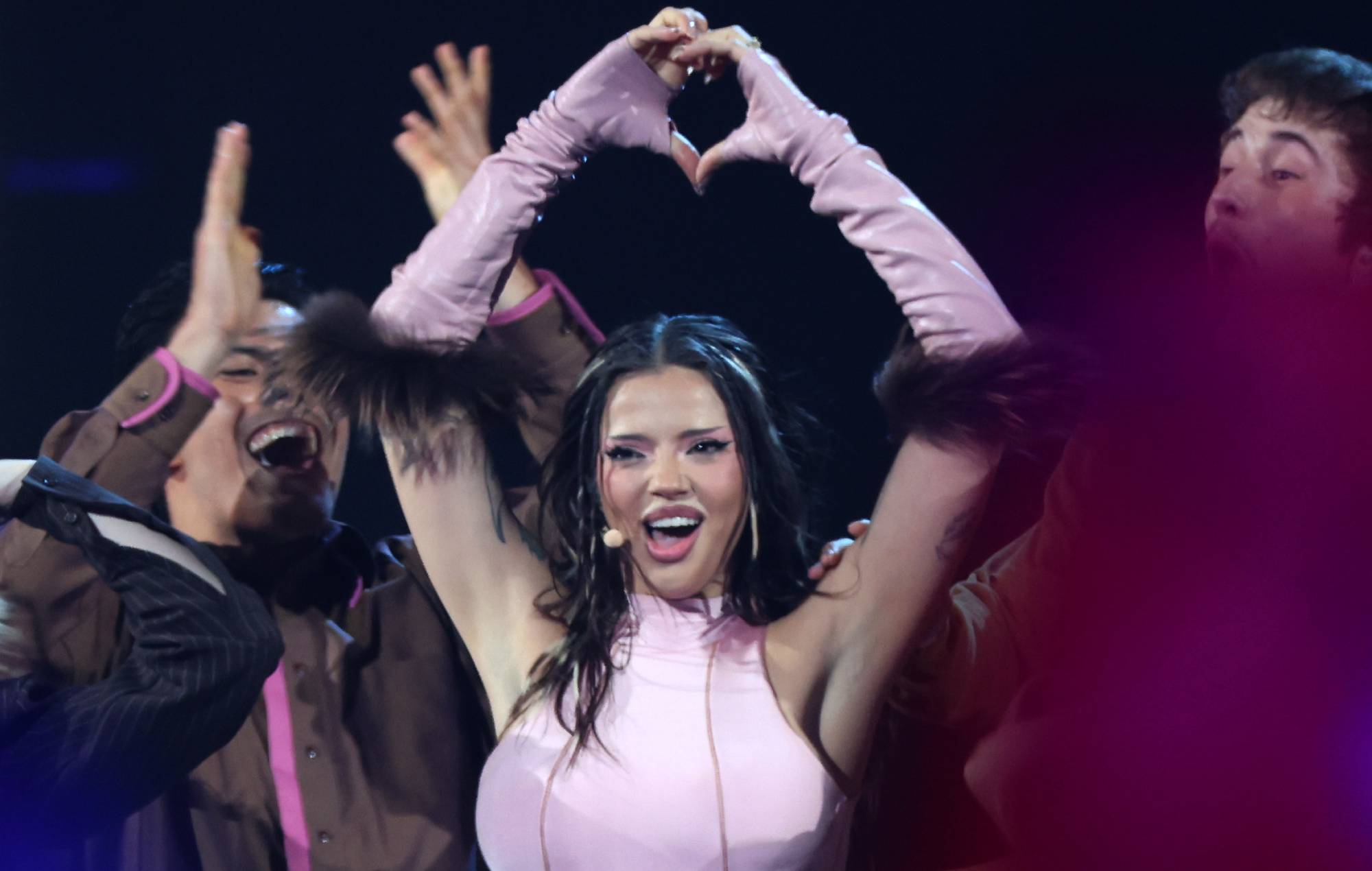
Bulgaria has its first-ever Eurovision win. Dara took the 2026 Eurovision Song Contest with ‘Bangaranga’, landing at the top of both the jury and public vote in Vienna’s Wiener Stadthalle on May 16, the 70th edition of the competition.
The victory came after Austria’s 2025 win with JJ’s ‘Wasted Love’, but the night in Vienna was never just about the songs. Israel’s participation once again dominated the atmosphere around the contest, with Noah Bettan finishing second and drawing audible boos when their high score was announced.
Dara, 27, won with a track that folds rap into bhangra-adjacent pop, and the performance was quickly shared online after the result was announced.
For the UK, it was a rougher night. Look Mum No Computer’s ‘Eins, Zwei, Drei’ ended up in 25th place, last on the table, with just one point from the jury and none from the public. The project belongs to Sam Battle, the YouTuber and electronic musician who used to front the indie band Zibra and is known for building instruments from unusual materials.
The contest had been under pressure for weeks before the final. Ireland, the Netherlands, Slovenia, Iceland and Spain all boycotted the event over Israel’s inclusion, despite the country’s military action in Gaza. During the semi-finals earlier in the week, Israel’s entrant Noam Bettan was met with a split response from the crowd, with some cheering and others booing and shouting anti-Israel slogans. At one point, a voice could be heard for nearly a minute saying, “Stop the genocide.”
Austrian broadcaster ORF, which hosted the show, had already said it would not mute negative crowd reactions toward any participants.
That wider row kept escalating right through the week. Amnesty International called for Israel to be suspended from Eurovision and took aim at the European Broadcasting Union for not removing the country in the same way it suspended Russia in 2022 after the invasion of Ukraine. “The failure of the European Broadcasting Union (EBU) to suspend Israel from Eurovision, as it did with Russia, is an act of cowardice and an illustration of blatant double standards when it comes to Israel,” said Amnesty International Secretary General Agnès Callamard.
She added: “Instead of sending a clear message that there is a cost for Israel’s atrocity crimes against the Palestinian people, the EBU has given Israel this international stage even as it continues to commit genocide in Gaza, unlawful occupation, and apartheid. The EBU is betraying the values of the Eurovision Song Contest, which include freedom from intolerance, hate speech, and discrimination.”
Israel has repeatedly rejected accusations of waging genocide, and denies committing any war crimes, maintaining that its operations are lawful acts of self-defence following Hamas’ attack on Israeli citizens at the Nova Music Festival on October 7 2023, which killed over 1,100 people and saw 250 taken as hostages.
Another boycott push came from No Music For Genocide, whose open letter asked fans to stay away from this year’s Eurovision unless Israel was barred from taking part. More than 1,100 cultural workers and artists signed on, including Brian Eno, Massive Attack, Paloma Faith, Paul Weller, Kneecap, Hot Chip, Of Monsters and Men, IDLES, Primal Scream, Sigur Rós, Young Fathers, Mogwai, Black Country New Road, Erika de Casier, Nadine Shah, Dry Cleaning, Ólafur Arnalds, David Holmes, Nemahsis, Macklemore, Roger Waters, Peter Gabriel, Vacations, Smerz, a number of former Eurovision finalists, and others. The letter was first shared on April 21.
Irish broadcaster RTÉ, meanwhile, aired the Eurovision-themed episode of Father Ted instead of the contest on Friday night.
Reports also emerged claiming that Israel’s government had run a “well-organised campaign” to use Eurovision as a soft power tool.
Elsewhere in the final, Boy George appeared with Senhit in San Marino’s entry, but the pair failed to qualify. It was one of those Eurovision nights where the scoreboard, the crowd, and the politics all seemed to be competing for attention at once.