Physical Address
304 North Cardinal St.
Dorchester Center, MA 02124
Physical Address
304 North Cardinal St.
Dorchester Center, MA 02124
Janet Jackson, Heart, Lucinda Williams, Norah Jones and more were honored at the 2026 Grammy Hall of Fame gala in Beverly Hills.
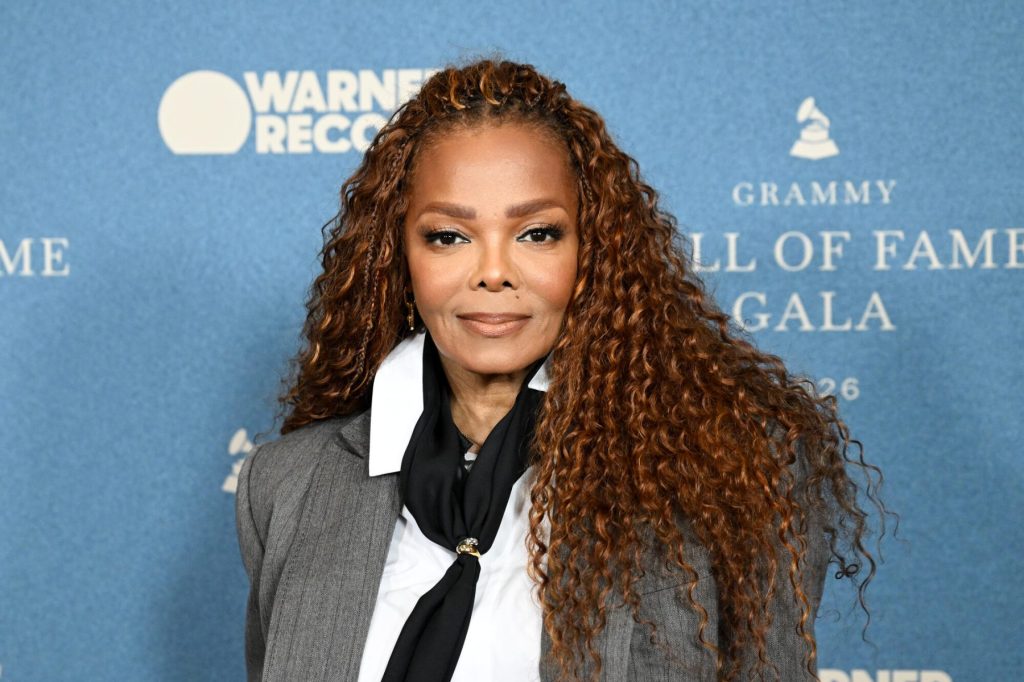
The third annual Grammy Hall of Fame gala at the Beverly Hilton in Beverly Hills on Friday, May 8, was as wide-ranging as the recordings it celebrated. One minute Josh Groban was singing the Sicilian-language version of The Godfather love theme, “Brucia La Terra”; the next, George Clinton was onstage with Erykah Badu and Blackbyrd McKnight tearing into Funkadelic’s “Maggot Brain” and “Can You Get to That.”
Broadcast journalist Anthony Mason returned as host, while 14 recordings were inducted into the Grammy Hall of Fame. Only seven were paired with live performances, but the evening still managed to stretch across gospel, Tejano, Americana, soft rock, children’s music and classic soul. Heart, Lucinda Williams and Clinton all revisited songs from albums in the Hall of Fame, while other artists stepped into the catalogues of legends: Take 6 covered the Soul Stirrers’ 1951 gospel standard “Jesus Gave Me Water,” Taylor Hanson tackled Nick Drake’s “Pink Moon,” and Isabel Marie sang Selena’s “No Me Queda Mas.”
Norah Jones also delivered a two-song set while receiving the Ray Charles Architect of Sound Award, and Teddy Swims and Groban each performed two songs in a tribute to Warner Records, this year’s label honoree. The gala was produced by former Grammy Awards executive producer Ken Ehrlich with Ron Basile, Chantel Sausedo and Lynne Sheridan; musical direction came from Cheche Alara.
Other inducted recordings this year included 2Pac’s All Eyez on Me, Radiohead’s OK Computer, Eric B. & Rakim’s Paid in Full, Alice Coltrane’s Journey in Satchidanada, The Rouse Brothers’ “Orange Blossom Special” and Bertha “Chippie” Hill’s “Trouble in Mind.”
Janet Jackson skipped the performance slot and instead came to accept the honor for Rhythm Nation 1814 alongside co-producer Jimmy Jam. Jackson framed the album as something far bigger than nostalgia, calling it “an ongoing force” that still pushes back against bigotry and tries to promote understanding.
“Rhythm Nation still resonates on a deep and profound level. It’s an ongoing force that fights bigotry and promotes understanding. It cannot be stopped. It’s simply too strong, too positive,” Jackson said. She also said the project was built around a hope that “peace prevail” everywhere, “peace the world over, peace among nations, peace in our neighborhoods, peace in our homes.”
Jam, who made the album with Terry Lewis and Jackson, said they were not trying to make a political statement at the time. They were reacting to what they saw on the news, to “all the pain and injustice and the tragedy,” and asking what they could do. He called the album a commercial success, but said its deeper impact was that “it changed lives, and so did Janet.” He also pointed to Jackson’s wider influence on female empowerment in music and said young people had gone back to school because of the album.
“Nearly 40 years later, the message still resonates,” Jam said. “It’s a reminder that music can heal, unite and inspire us to change. But also, unfortunately, there’s still a lot of work to still be done.”
Ann and Nancy Wilson have probably played “Magic Man,” “Dreamboat Annie” and “Crazy on You” more times than anyone can count since Heart’s debut album, Dreamboat Annie, arrived in August 1975, and then six months later in the U.S. Still, the songs landed with force at the gala, carried by the same sense of resolve that made the band such a lasting presence in the first place.
Ann thanked Ken Ehrlich, lawyer Don Passman and album producer Mike Flicker. Nancy then turned to the musicians who helped shape the record, including Howard Leese and Roger Fisher. “These are the original gypsy tribe that started the whole thing,” she said. “We did this together, and the beautiful poetry and music that we made together still resonates to this day; to this evening.”
Lucinda Williams performed two songs from Car Wheels on a Gravel Road, the 1998 album widely credited with helping define Americana before the genre had a formal home at the Grammys. She sang “Can’t Let Go” and the title track, while Mason noted that without Williams, listeners might never have gotten to Jason Isbell, Margo Price or Brandi Carlile.
The album won best contemporary folk album at the time, simply because Americana was not yet a category. Williams accepted the recognition with the kind of plainspoken wisdom that has always suited her work. “They said my music fell in the cracks between country and rock, which later became known as Americana,” she said. “Don’t give up if your music falls betwen the cracks. That’s where it’s supposed to be. That’s a good place.”
She closed by saying it felt good “to be recognized for what you do and not how many records you sell.”
Jones was the second artist to receive the Ray Charles Architect of Sound Award, following Jon Batiste last year. Her connection to Charles goes back to their 2004 duet “Here We Go Again,” which won record of the year and best pop collaboration with vocals at the Grammys.
For the gala, Jones performed “Seven Spanish Angels,” the song Charles recorded with Willie Nelson, and “Hallelujah, I Love Her So.” She said the honor hit especially hard because of that personal history. “When I met Ray, I burst into tears,” she said. “His music is everything to me, and I wouldn’t be anything without listening to him.”
Isabel Marie sang “No Me Queda Más,” one of the standout ballads from Selena’s 1994 album Amor Prohibido. On behalf of Selena, the award was accepted by her older sister, Suzette Quintanilla-Arriaga, who thanked the Grammy Hall of Fame for recognizing the record and spoke directly about what Selena continues to mean to Latinos.
She also acknowledged A.B. Quintanilla, who produced the album, along with Pete Astudillo and Ricky Vela, who wrote many of its songs. Then she returned to Selena herself, who was killed in 1995 at age 23. “I also want to show love to what Selena represents, still to this day, so many years later, even though she’s physically gone,” she said. “A shout out to my sister, Selena, who will forever be remembered.”
Fyütch and Aura V took on Ella Jenkins’ “You’ll Sing a Song and I’ll Sing a Song,” beginning with a clip of Jenkins singing it on Mister Rogers Neighborhood before moving into their live version. The pair, who won a Grammy in February for their album Harmony, started in the song’s original nursery-rhyme mode before 8-year-old Aura V suggested a change. “Can we speed it up? I think it needs a little bop to it,” she said.
She was right. By the end, the song had shifted into a hip-hop tilt that brought the 1966 recording into 2026 without losing its easy charm.
Taylor Hanson, best known by plenty of listeners for Hanson’s 1997 smash “MMMBop,” handled a tougher assignment with surprising confidence: Nick Drake’s “Pink Moon.” The song, the opening and title track from Drake’s third and final studio album, was famously spare and initially baffling to many listeners, even as its reputation has only grown over time.
Hanson’s version fit the occasion by keeping the focus on the song rather than the singer. It was one of the night’s more delicate turns, and one that quietly underlined how much of the gala’s appeal comes from that collision of old material and new voices.
Aaron Bay-Schuck, co-chairman and CEO of Warner Records Group, used his remarks to talk about taking over one of the industry’s most storied labels and why the company’s history still matters. He pointed to Prince, Madonna, Jimi Hendrix, Fleetwood Mac, Tom Petty, the Red Hot Chili Peppers and Neil Young as examples of artists who defined the label by being fearless and unmistakably themselves.
“When we took over the leadership of Warner Records in 2018 we knew we needed to reposition the company for the future, but we wanted first to approach that by acknowledging the past,” he said. Bay-Schuck argued that even in a music business shaped by “data and algorithms,” talent, quality and vision still had to lead the way, and that artist development remained central.
Tom Corson, co-chairman and COO of Warner Records Group, also spoke. Teddy Swims performed “Mister Know It All” and his Hot 100-topping breakthrough “Lose Control,” while Josh Groban delivered two songs from Cinematic, which was released the same day. It was a fitting reminder that Hall of Fame nights are never only about looking backward. They’re also about who gets to carry these songs forward.