Physical Address
304 North Cardinal St.
Dorchester Center, MA 02124
Physical Address
304 North Cardinal St.
Dorchester Center, MA 02124
After Netflix’s Apex used The Chemical Brothers’ 2015 track "Go" in a timed chase scene suggested by actor Taron Egerton, the song shot up 429% in U.S. on-demand streams. The sync pushed the single back into charts and playlists, proving a well-placed scene can revive a track overnight.
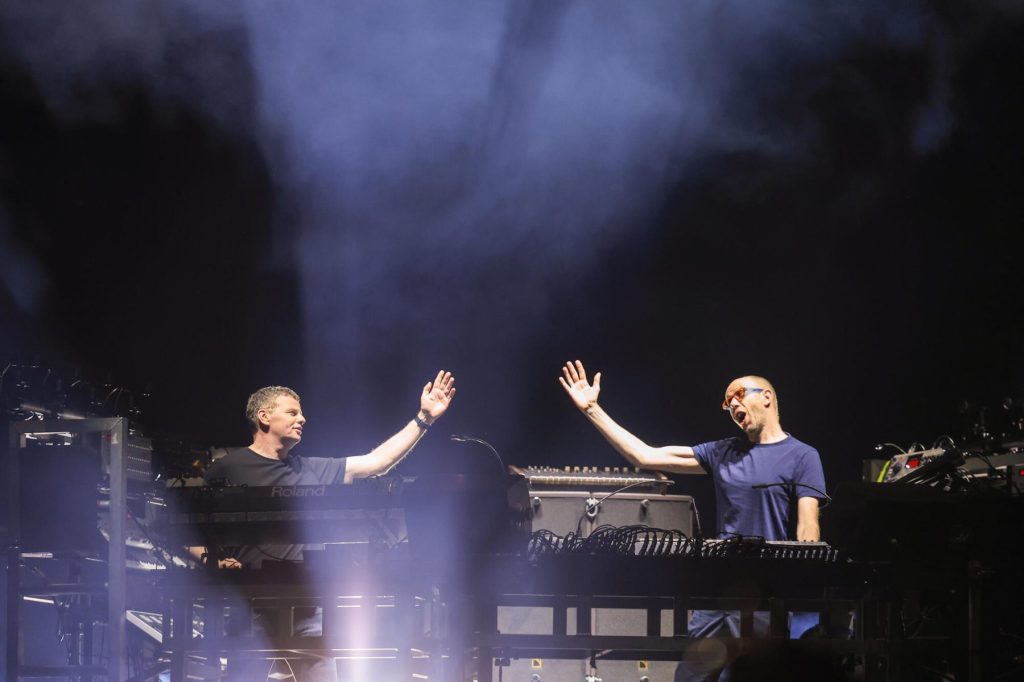
There are pop culture moments that feel engineered to retroactively rebrand a song. The Chemical Brothers’ 2015 cut “Go” just had one of those moments: tucked into a tense sequence in Netflix’s new thriller Apex, the track has been lifted out of eight-year-old album context and thrust back into listeners’ earbuds.
Data from Luminate shows the effect in blunt numbers. In the week after Apex debuted on April 24, “Go” jumped 429 percent in U.S. on-demand streams — from about 92,000 streams the prior week to roughly 487,000 between April 24 and April 30. Where the song had been settling into a daily groove of roughly 13,000 to 14,000 plays, it spiked to 127,000 on April 30 alone. It’s also climbed to No. 5 on the Dance Digital Song Sales chart.
The placement is not incidental. Apex stages a handful of kill-or-be-killed beats, but the moment that made listeners reach for their phones is the scene where Charlize Theron’s Sasha is given a taunting ultimatum by Taron Egerton’s villain, Ben: he tells her she has until the end of “Go” to bolt. The idea of timing a chase to the length of a song is delightfully old-school cinematic mischief, and it landed because Egerton himself suggested the track.
“Taron brought this song by The Chemical Brothers,” director Baltasar Kormákur told Decider. “I was like, ‘That’s perfect.’ Not everyone was of that mind in the beginning. Then Taron did [the scene] and the whole crew… was like, ‘That’s it. It’s perfect.'”
It’s easy to imagine why. “Go” opens with a clipped, nervous pulse and Q-Tip’s spoken-word cadence — the kind of compressed urgency that syncs perfectly to a countdown. In the movie the music does more than underscore action; it becomes a metronome for anxiety. The song’s buildup and sudden drops give the chase a score that feels engineered to keep viewers’ hearts high and their eyes glued to the screen.
For fans of The Chemical Brothers the surge feels familiar, like seeing an old friend in a new coat. “Go” was the second single from their eighth album, Born in the Echoes, released in May 2015, and it originally hit the Hot Dance/Electronic Songs chart for a brief run that August, peaking at No. 40. Since then it’s become one of those cuts that sits in the group’s post-2010 catalog and turns up reliably in DJ mixes and festival sets; at live shows its clipped urgency translates into a palpable crowd energy, a moment when the visuals snap in time with the kick drum.
There’s also a particular kind of fandom gratification in this kind of rediscovery. People who have loved the band for decades get to watch younger viewers do a reverse deep-dive — a meme, a playlist add, an Instagram clip leads someone back to the original album. And for casual listeners, a single well-placed scene does the work of a radio cycle in a fraction of the time.
Apex, meanwhile, is doing the heavy lifting. The film sits at No. 1 on Netflix’s weekly global top 10 for films and series, which gives the sync an automatic, massive audience. Syncs have always been a way for electronic music to find second lives — think of the ways cinematic trailers or TV scenes have resurrected tracks — but this one has the added twist of being actor-curated. Taron Egerton didn’t just act; he brought a creative choice that reshaped the moment.
It’s a reminder that with the right placement, even a mid-decade electronic single can re-enter the public conversation fast. For The Chemical Brothers, who’ve spent three decades shaping how techno and big-room electronics translate to both clubs and arenas, the win is also about timing: a tight edit, a confident vocal cameo from Q-Tip, and a streaming ecosystem that still responds, immediately, when a song suddenly matters again.