Physical Address
304 North Cardinal St.
Dorchester Center, MA 02124
Physical Address
304 North Cardinal St.
Dorchester Center, MA 02124
Songwriter Savan Kotecha reflects on co-writing Justin Bieber's 'Beauty and a Beat', from writing sessions in Stockholm to Scooter Braun's office, Nicki Minaj's verse, and the song's Coachella-driven reemergence that sent it to No. 1 on global charts 14 years later.
There is a particular small, astonishing pleasure to watching a song you helped shape find a second life. For Savan Kotecha, that pleasure arrived this spring when Justin Bieber pulled an early-career cut into the desert light at Coachella and a 14-year-old single began climbing global charts again.
Kotecha, who has spent decades in pop rooms with Max Martin and artists from Britney Spears to One Direction, remembers the moment the idea for “Beauty and a Beat” landed in his inbox. He was in Stockholm, sitting on his bed, headphones on, working the melody while Bieber was in Los Angeles cutting vocals. “Max called me and said he needed help with the idea,” he says. “I remember sitting on my bed in my apartment in Stockholm working on it.” That image of a songwriter alone with a laptop and a melody feels almost quaint now, but it is an honest portrait of how many pop classics begin.
There are other, sharper memories. Kotecha describes going to Scooter Braun’s old office in West Hollywood to watch the music video for the first time, and the surreal thrill of hearing Nicki Minaj’s verse land on the track. He still laughs about the “Selener” line, the little cultural echo that tied the record to its moment. “Getting Nicki on it was like, ‘Whoa,'” he says. “She just elevated it.”
“I was too old and unattractive to be at Coachella,” he jokes when asked if he attended. “But I woke up, doom scrolled and saw clips. I was like, ‘Oh, that’s fun.’ Then it went No. 3, then No. 1. It’s wild.”
There is a practical side to the story worth hearing. Kotecha describes a period when he and Martin were obsessive about phonetics and phrasing, spending a week fine tuning lyrics so each syllable hit. “We really tried to make things as bulletproof as possible,” he says. That care is audible on the record: the chorus locks in in a way engineered to stick, the drops are clean, the features timed to shift energy rather than interrupt it.
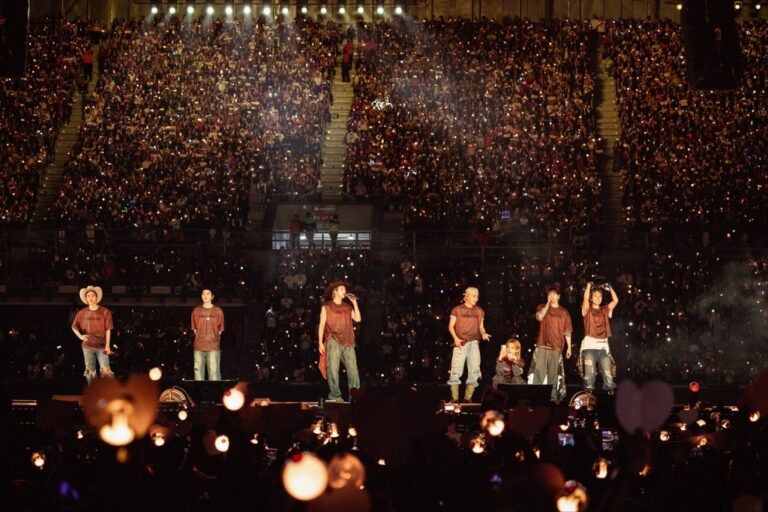
For fans in the crowd that night at Coachella, the moment played like a soft time travel. Bieber threaded YouTube clips of his early hits into the set, and when “Beauty and a Beat” hit, phones rose in unison. Clips spread across social platforms within minutes. For people too young to remember the single on first release, the song arrived as new. Kotecha laughs at this image: “My kids weren’t alive when that song came out, so they think it’s a new song. Their friends are singing it at school in Sweden as if it’s new.”
The chart reaction has been unmistakable. The track surged to No. 1 on both Billboard’s Global 200 and Global Excl. U.S. charts, a reminder that streaming flattens time in useful ways. Kotecha frames the effect candidly: streaming can bury or resurrect; when a song resonates, it travels fast across playlists, shows, and schoolyards. “They just want s–t that’s great,” he says about younger listeners. “When it’s really great, it’s ear candy — they just listen again and again.”
There is also a modest career arc threaded through his comments. Kotecha has stepped back and leaned into family responsibilities in recent years. “I was so deep in it and I felt like I was missing my kids’ childhood,” he says. He slowed down, then returned, contributing to newer hits and occasionally watching catalog tracks do their quiet work in the background. That detachment makes a resurgence sweeter, less a professional vindication than a personal reminder that the songs we trade away to the world keep their own lives.
He is not sentimental about the mechanics. He credits the craft — the late nights tightening a line, the small decisions about sound — for why certain records endure. He points to other songs he would not mind hearing again, including Ariana Grande’s “One Last Time” and One Direction’s “What Makes You Beautiful,” the latter a track he calls personally important. “Anytime people are listening to songs I’ve been able to be a part of, I feel very lucky,” he says.
For fans, the Coachella moment was an invitation: to sing older songs louder, to recontextualize them in a new live setting, to make a childhood hit someone else’s new anthem. For Kotecha it was a reminder that hits do not always follow a straight line from release to legacy. Sometimes they sleep, then wake when a stage, a crowd, and a few seconds of viral video conspire to pull them back into the world.
And for a songwriter who started on a bed in Stockholm and has spent decades in rooms with producers and pop stars, there is a simple, ongoing thrill: hearing those takes, the first playback, the moment a verse lands. “If it’s good, it’s magical,” he says. “Everything is just so exciting.”